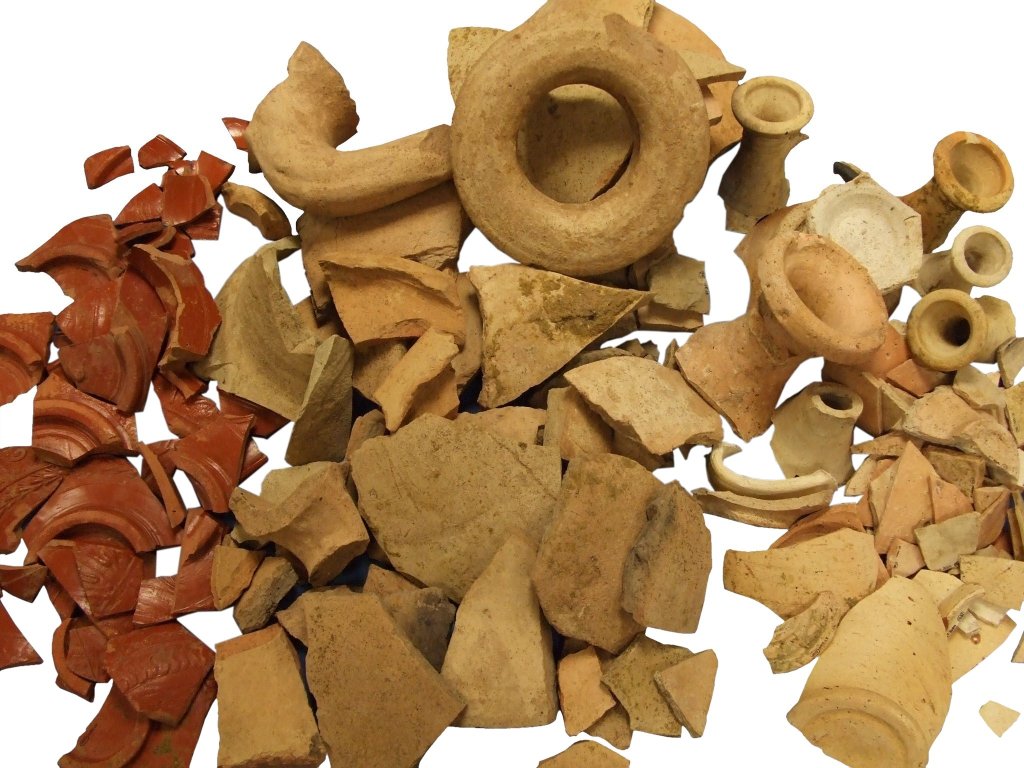
Archaeological excavations have shed new light on everyday life in Roman Leicester. The most common finds are sherds of broken pottery. Pottery was mass-produced in the Roman period making it a cheap, hard-wearing alternative to glass and metal, which could easily be replaced if broken. The inhabitants of Leicester used pottery from Cambridgeshire, Warwickshire and Dorset as well as wares imported from Spain, Gaul (France), Germany, Italy and North Africa. A wide variety of vessels was available, from fine table wares for serving food and drink to more utilitarian pots for cooking and storage. All would have been readily available to buy in shops and stalls in the forum, the macellum or elsewhere in the town. Food too was imported in large quantities, with olive oil, wine and fish sauce all brought by sea from the continent in large storage vessels called amphorae.
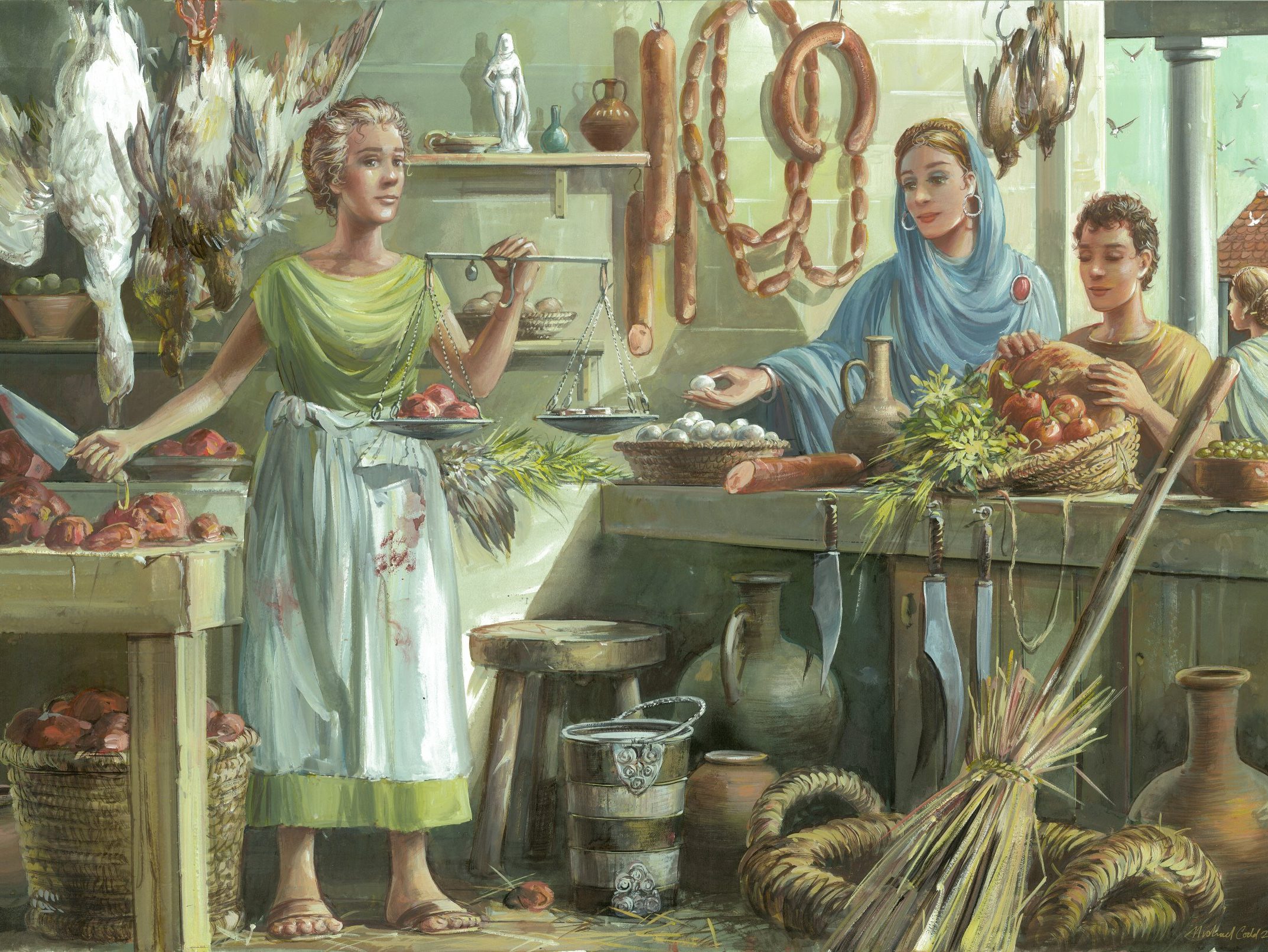
Food remains found in Leicester show that people enjoyed a varied diet. Barley and spelt wheat, which were used to make bread and porridge and to thicken stews, were cultivated locally, as were peas, beans, leaf beets, apples, plums and cherries. Wild foods were also harvested, including hazelnuts, sloes, blackberries, elder and sorrel. Most people could season dishes with wild mint, coriander, opium poppy and mustard, whilst the rich could afford imported foods such as lentils and dried fruit. Meat mostly came from domesticated cattle, sheep, goat, pig and fowl, but wild deer, hare, geese, duck, woodcock and coot were also hunted. The fish that were consumed were mainly eels and herrings, together with freshwater varieties caught locally. Oysters too were a common food and were probably transported from the Essex coast. Finds of shell indicate that eggs were eaten, whilst other foods which must have been consumed, such as honey, milk, and cheese, have left no trace. Although most food was sold in the forum and the market-hall, a recent excavation on Castle Street has revealed evidence for a Roman ‘delicatessen’ selling both local foodstuffs and exotic imports, such as figs, grapes and olives.

Roman Leicester would have been a bustling place full of opportunities to work and to shop. Unfortunately – with the exception of the possible delicatessen – it has not yet been possible to discover what was sold in specific shops; nevertheless, people in Leicester owned a vast array of personal items including jewellery, tweezers and mirrors, and everyday household items such as knives, spoons and styli for writing. Some of these were of continental manufacture but most were locally produced. Further evidence for commerce is apparent in the number of steelyard beams (weighing apparatus) found during recent excavations, whilst recreational items included bone dice and large numbers of gaming counters. Most of these are found by archaeologists because they had become lost or broken and thrown away and they show that the people of Roman Leicester were as diverse and multicultural in their tastes as the city’s inhabitants are today.
Abundant evidence of craft activities has been found – although organic materials such as wood and textiles rarely survive, the tools used to work them frequently do. Iron, bronze, lead, glass, bone, horn and leather were all being worked in Leicester and examples of such manufacture include bone pin workshops and a smithy found at Vine Street.
 ROMAN LEICESTER