As well as Leicester’s Roman public buildings, archaeologists have also uncovered a number of private houses. These ranged from rows of small, simple rectangular buildings, to large, elaborate Mediterranean-style courtyard houses. Whilst public buildings were normally constructed in stone, houses and many of the other privately owned buildings were built using dried clay bricks, timber, or a combination of the two. Stone was used in some homes, however, including the Vine Street Courtyard House. Roofs were either thatched, in the case of the poorer buildings, or covered with slate or tiles. Ceramic tiles were laid out on the ground to dry before they were fired and it seems children, cats, dogs and sheep were all allowed to roam freely across them, often leaving impressions of their feet. The courtyard house on Vine Street was roofed with diamond-shaped stone slates, quarried locally near Groby. When the building was demolished in the late 4th century these were carefully recovered from the roof and stacked in the courtyard for intended re-use.
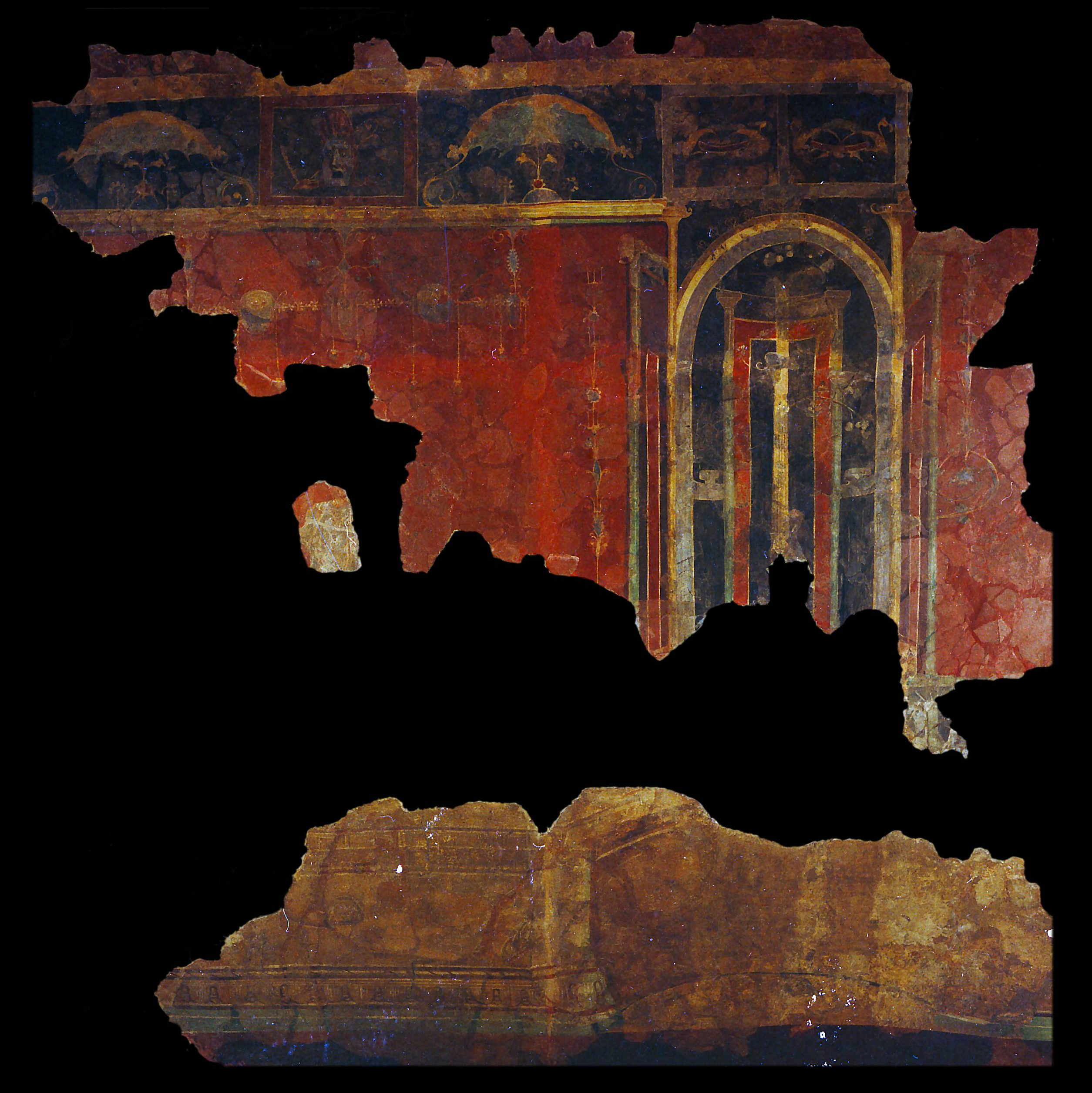
Most floors would have been made of compacted earth but in some houses concrete floors were laid in the more important rooms or were decorated with mosaic pavements. Walls and ceilings were rendered with plaster and painted with a variety of effects, including imitation marbling, geometric panels, architectural friezes, figures and foliage. Little painted wall-plaster has been found in-situ during recent excavations but in the late 1950s a large house, now beneath Vaughan Way, was partially excavated. Known as the Blue Boar Lane townhouse this was built in the early 2nd century AD and was occupied for around 40 years before it was demolished to make way for the macellum. Two ranges of rooms were found surrounding a colonnaded courtyard. These were all floored with concrete or mosaic pavements and the walls were decorated with elaborate architectural and figurative schemes.

Until recently this was the largest Roman townhouse excavated in Leicester, but it has now been surpassed in size by the Vine Street courtyard house. This spacious home measured 40m by 40m and, with four ranges of rooms linked by corridors surrounding a central courtyard, it would have been an ostentatious display of wealth. The main reception and formal dining rooms were positioned facing the entrance. These would probably have been reserved for special occasions and other large reception rooms would have been used on an everyday basis. In one corner of the building was a kitchen, whilst a range of smaller rooms would have acted as more private sitting rooms, bedrooms, offices and porter’s lodges. The large courtyard could be viewed from all sides and contained an ornamental pool, whilst land behind the building may have been laid out as a formal garden.


Images: Mike Codd / ULAS
The Vine Street courtyard house was not the only Roman building to occupy the site. The archaeological excavation uncovered a complex sequence of buildings which showed that this area of the town was repeatedly redeveloped throughout the Roman period.
Early to mid 2nd century AD
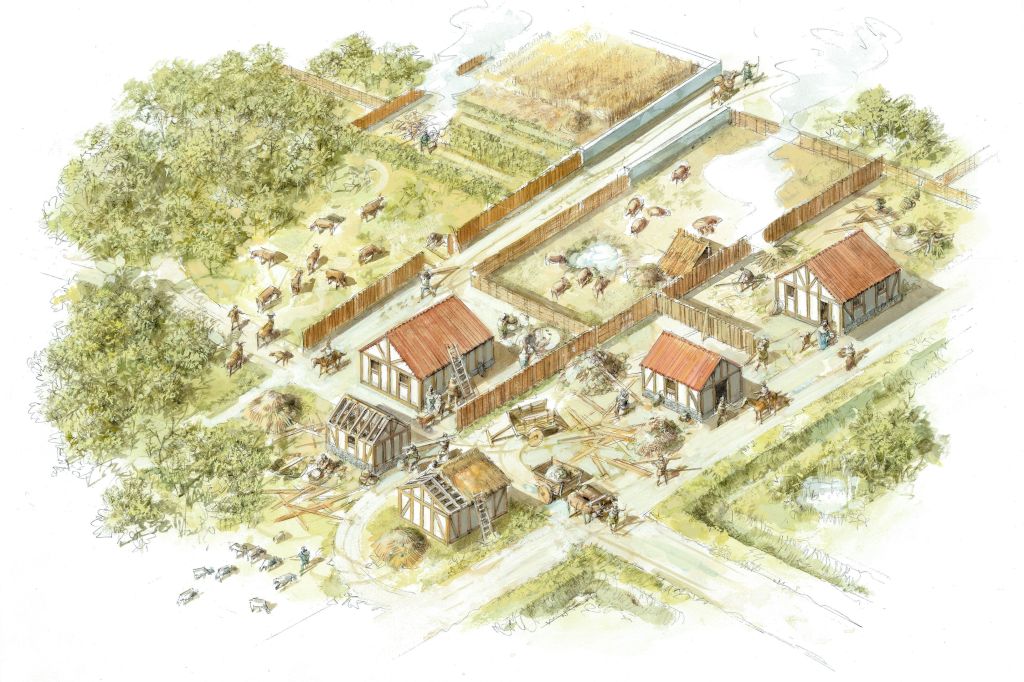
The excavation revealed a complex sequence of Roman buildings constructed on the junction of two streets between the 2nd and 4th centuries AD. Occupation initially began as a scattered development of timber buildings amongst fenced paddocks and yards.
Mid to late 2nd century AD
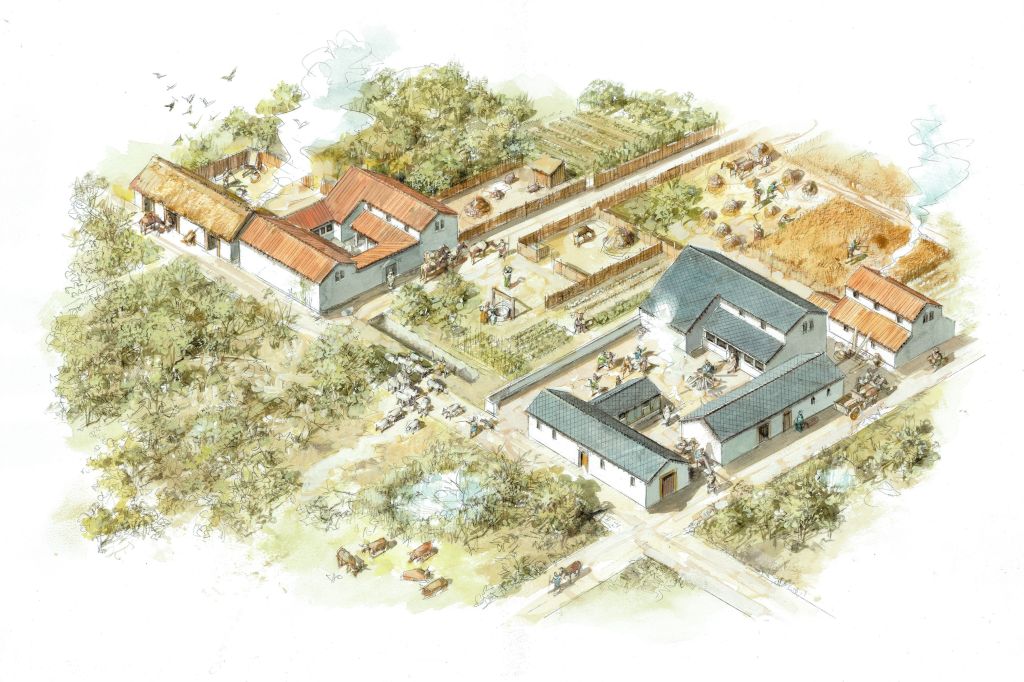
The timber buildings lasted for about fifty years before being replaced by a mixture of more sophisticated stone houses and commercial buildings. One of these houses possibly contained a bath suite incorporating a room and sunken pool heated through a small hypocaust system (underfloor heating).
Early 3rd to mid -4th century AD

In the early 3rd century AD three of the stone buildings underwent a massive redevelopment into a spacious townhouse. This measured 40m by 40m and, with four ranges of rooms linked by corridors surrounding a central courtyard. It is the largest Roman house ever excavated in Leicester.
Mid to late 4th century AD

By the mid-4th century AD the courtyard house was in poor condition. Parts of it were knocked down whilst other rooms were being converted for use as a smithy and as workshops making bone pins. A hoard of 500 Roman coins was found buried under the floor of another room.
 ROMAN LEICESTER